
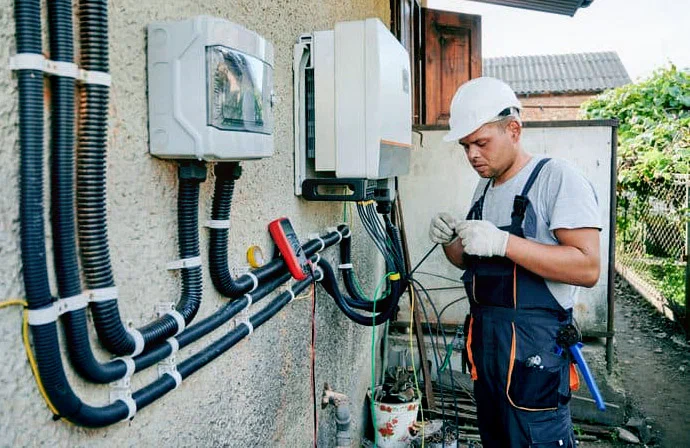
For residents living along the Gulf Coast, the beauty of the ocean comes with unique challenges for home maintenance. If you are searching for an Affordable Electrical Service Near Clearwater, FL, you likely already know that the salt air and high humidity can be relentless. While we often focus on how the salt spray affects our car’s paint or our home’s exterior siding, we frequently overlook the silent toll it takes on the wires, terminals, and panels hidden behind our walls.
The Corrosive Power of Salt Air
One of the most significant factors affecting coastal homes is electrolytic corrosion. Salt is highly conductive and hygroscopic, meaning it attracts water. When salt-laden mist settles on electrical components, it creates a bridge for current to leak, which accelerates the oxidation of metals.
- Corroded Terminals: Copper wires inside outdoor lighting fixtures or AC disconnect boxes can turn green and brittle.
- Breaker Failure: Salt can penetrate electrical panels located in garages or on exterior walls, causing the internal mechanisms of circuit breakers to seize up.
- Faulty Connections: As metal components corrode, resistance increases. This leads to heat buildup, which is a leading cause of electrical house fires in coastal regions.
Humidity and Mold in Electrical Conduits
In Florida, humidity levels often soar above 80%. This moisture doesn’t just stay outside; it finds its way into crawlspaces, attics, and even inside electrical conduits.
When moisture traps itself inside a conduit, it can lead to insulation breakdown. Over time, the protective coating on your wires degrades, leading to short circuits. Homeowners might notice frequent tripped circuit breakers or a strange humming sound coming from their walls. To combat this, modern installations require specific moisture-resistant wire types, such as THWN (Thermoplastic Heat and Water-resistant Nylon-coated), which is designed to withstand damp environments.
The Impact of Tropical Storms and Lightning
Clearwater and the surrounding Pinellas County area are part of the “Lightning Alley.” The combination of high heat and coastal moisture creates frequent, intense thunderstorms.
Power Surges and Transients
A lightning strike doesn’t have to hit your house directly to cause damage. A strike near a power line can send a massive surge of electricity through your grid. Older homes without whole-house surge protection are sitting ducks. These surges can fry the sensitive motherboards in your refrigerator, HVAC system, and home computer.
Wind-Driven Rain
During tropical storms, rain isn’t just falling—it’s being pushed horizontally at high speeds. This pressure can force water into outdoor outlets or poorly sealed meter bases. If your outdoor GFCI outlets do not have “In-Use” weather covers, they are highly susceptible to short-circuiting during a storm.
The Hidden Danger: Grounding System Degradation
The grounding system is your home’s primary defense against electrical faults. It directs excess electricity safely into the dirt. However, in coastal areas, the soil is often sandy and can be highly acidic or saturated with salt.
Over time, the copper-clad ground rod buried in your yard can deteriorate. If the connection between your electrical panel and the earth is severed or weakened by corrosion, a power surge has nowhere to go but back into your appliances—or through you. Ensuring you have a certified electrical safety inspection is the only way to verify that your grounding system is still intact.
Protecting Your Investment
Maintaining Safe Wiring in Older Florida Houses requires more than just luck; it requires a proactive approach to the environment. Because coastal weather is so aggressive, electrical systems in beachside or near-coastal communities often have a shorter lifespan than those in inland states.
Homeowners should look for signs of “salty stress,” such as:
- Flickering lights during high-wind events.
- Discoloration or “rust” marks on the front of the electrical panel.
- Outlets that feel warm to the touch or smell like burning plastic.
- A “popping” sound when plugging in appliances.
Expert Solutions for Coastal Homeowners
Dealing with the unique variables of Florida’s climate requires specialized knowledge. From installing corrosion-resistant hardware to upgrading panels to withstand the humidity, professional intervention is essential for long-term safety. For reliable inspections, panel upgrades, and emergency repairs, you can trust the expertise of Doolbar Electrical Contracting Service LLC.